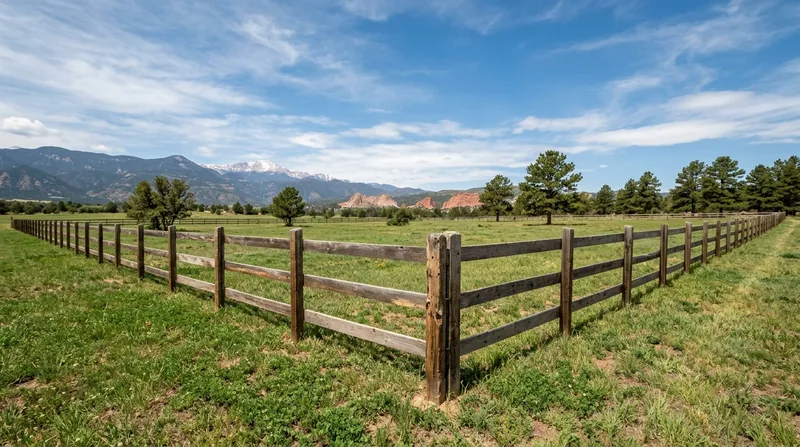




Farm fence installation in Colorado Springs demands straight lines, solid posts, and gates that handle equipment and livestock. Whether you're securing acreage in Monument, Black Forest, Falcon, or the rural edges of Colorado Springs itself, a well-built ranch fence holds its line for decades and costs far less to maintain than one installed without proper bracing, post depth, and gate hardware. We work from your existing survey, set posts in concrete at the depth your soil and site require, and brace every corner to stop sag and drift. Since 2015, we have built split rail, no-climb horse fence, pipe fence, and field wire systems for property owners across Greater Colorado Springs. This guide covers what the work costs, how we build it, and what to expect when you call.
Why Ranch Fencing Matters on Colorado Springs Acreage
Acreage demands fencing that holds under weather and animal pressure. A fence that sags at the corner or settles unevenly at the post line will continue to fail, and the repair cost climbs each year it stands crooked. Horses, livestock, and equipment trailers all test a fence at its weak points. Posts set shallow, corners without bracing, and gates hung on undersized hardware all fail within three to five years. The right build stops this cycle before it starts.
- Posts set 36 to 48 inches deep in concrete resist frost heave and animal pressure over the long term.
- Braced corners and anti-sag hardware at rail connections hold a straight line and prevent racking.
- Gates sized for trailers and equipment reduce the need for workarounds and keep property access simple.
- Split rail, no-climb horse fence, and pipe systems all outlast field wire alone when properly installed.
A fence built to last stops repair calls and keeps your property secure and accessible.
Key info: Colorado 811 utility locates are required by law before any post holes are dug. Call 811 or visit colorado811.org to request a locate. We factor this into the job timeline and will not dig until utilities are marked. This protects underground lines and keeps the site safe.
For more detail on fence repair and post replacement on existing lines, see our fence post repair and replacement service.
How We Build Farm and Ranch Fencing in Colorado Springs
The process starts with a site walk and a clear understanding of the fence line. We work from your existing survey and install on the line you identify. We mark the post locations, call for a Colorado 811 utility locate, and then dig, set, and brace every post. Rails or wire go up after concrete cures, gates are hung level and plumb, and hardware is installed for smooth operation and years of reliable service.
- You identify the fence line using your survey or property markers, and we confirm the layout on the ground.
- We request a Colorado 811 utility locate and wait for utilities to be marked before digging post holes.
- Posts are dug to depth, set in concrete, and braced at corners to prevent sag and racking.
- Rails, pipe, or wire are installed and tensioned according to the system you choose.
- Gates are hung square, fitted with self-closing or self-latching hardware, and tested for smooth operation.
- We walk the line with you, confirm all work meets your expectations, and answer questions about maintenance.
The entire process is transparent, and we keep you informed at every step.
Example: A property owner in Falcon with 8 acres and a 600-foot fence line wanted a split rail fence with a 12-foot equipment gate. We located utilities, set 24 posts at 4 feet deep in concrete, installed two-rail cedar rails with anti-sag bracing at all four corners, and hung a cantilever gate with self-closing hardware. Total time from survey to final walk-through was 10 working days. The fence is now five years in service with no settling or sag.
Related service: gate installation and repair covers everything from swing gates to cantilever systems and hardware upgrades.
Fencing Methods: What Works Best for Acreage
| Approach | Description | Best for |
|---|---|---|
| Split Rail Fence | Cedar or pressure-treated rails set in mortised posts, typically two or three rails high, installed with anti-sag bracing at corners. | Property boundaries, aesthetic appeal, and areas where a solid barrier is not required. Common in Monument and rural Colorado Springs. |
| No-Climb Horse Fence | Welded wire mesh or vinyl-coated wire in a 2x4-inch or 2x6-inch grid, mounted on posts with tension bands and stretcher bars to keep wire tight and prevent sagging. | Horse and livestock containment. Wire stays tight under animal pressure and eliminates footholds that horses or cattle can use to climb or escape. |
| Pipe Fence | Steel or galvanized pipe posts and rails, bolted or welded at joints, often with a powder-coated finish for durability and appearance. | High-traffic areas, equipment gates, corrals, and properties where maximum durability and low maintenance are priorities. |
| Field Wire and Barbed Wire | Wire fencing stretched tight between posts, often combined with wooden or pipe rails for added strength and visibility, installed with proper tension and corner bracing. | Large acreage, cattle containment, and boundary marking where cost per linear foot is a priority and appearance is secondary. |
Each method has a specific purpose. The best choice depends on your animals, site layout, and long-term maintenance expectations. We help you weigh the trade-offs between cost, durability, and function.
Farm and Ranch Fencing Cost in Colorado Springs: What to Expect
Farm fence installation in Colorado Springs starts at around $12 per linear foot for split rail or field wire systems, depending on post spacing, soil conditions, and the complexity of the site. No-climb horse fence and pipe fence run higher because of material cost and installation labor. A 600-foot line with split rail and two gates can range from $9,000 to $14,000. A longer run with pipe and multiple equipment gates will exceed that. The exact number depends on site access, terrain, post depth, and how many corners require bracing.
Factors that affect your final cost include:
- Fence length measured in linear feet and the number of gates and their size.
- Soil type and drainage at the site, which determines how deep posts must be set and whether concrete curing time affects the schedule.
- Terrain: steep or rocky ground requires more labor and sometimes specialized equipment to dig post holes.
- Corner bracing and anti-sag hardware, which add cost but prevent expensive repairs later.
- Material choice: cedar split rail costs less upfront than pipe, but pipe lasts longer and requires no staining or replacement.
Getting two or three estimates from local contractors helps you understand the range and what each price includes. A low bid that skips corner bracing or uses shallow post sets will look good on paper but cost more to repair in three years. Our estimate includes a full walk-through and a written breakdown of materials, labor, and timeline.
For a detailed pricing overview and examples by project size, visit our pricing page.
Farm and Ranch Fencing Near Me: What Colorado Springs Homeowners Should Know
When you hire a fencing contractor for acreage in Colorado Springs, Security-Widefield, Black Forest, or Falcon, verify that the contractor is fully insured with general liability and workers' compensation coverage. Ask for a certificate of insurance on request. Fence installation is not licensed at the state level in Colorado. Licensing is set by individual municipalities, and requirements vary from one city to the next. Always check with your local building department to learn whether a permit is required for your fence, what height limits apply, and whether setback or corner-visibility rules restrict placement. If you are in a master-planned community or an HOA, review your architectural standards before you design the fence. Many HOAs govern fence height, material, and color, and approval must come before work begins.
Key steps to take before you hire:
- Check with your local building department or county assessor to confirm whether a permit is required and what the rules are for setbacks, height, and materials.
- Review your HOA architectural guidelines if you live in a master-planned community, and submit plans for approval before signing a contract.
- Confirm that the contractor is fully insured and ask for a certificate of insurance naming you as an additional insured.
- Get at least two estimates in writing, and compare what each one includes for materials, labor, gates, and hardware.
- Check references from recent projects in your area, and ask about the timeline and whether the work was completed on schedule.
A contractor who listens to your site constraints and walks you through the permitting and design process is worth the call. Contact us for a free estimate and a no-pressure site walk.
Farm & Ranch Fencing in Colorado Springs: Pricing Guide
| Service | Price | Details |
|---|---|---|
| Split Rail Fence | Starting at $12/ft | Two-rail cedar or pressure-treated pine, posts set at 4-foot depth, basic corner bracing included, per linear foot |
| No-Climb Horse Fence | Starting at $18/ft | Welded wire mesh or vinyl-coated wire, tension bands and stretcher bars, posts set 4 feet deep, corner anti-sag bracing included |
| Pipe Fence | Starting at $22/ft | Galvanized or powder-coated steel pipe, bolted or welded joints, posts set 4 feet deep, includes corner bracing and hardware |
| Field Wire and Barbed Wire | Starting at $8/ft | Wire stretched tight between posts, often combined with wooden or pipe rails, basic corner bracing, lowest cost per linear foot option |
| Equipment Gate Installation | Starting at $800 | Cantilever or swing gate, 12 feet wide typical, self-closing or self-latching hardware, hung level and square, tested for smooth operation |
| Free Estimate | No charge | Site walk, fence line confirmation, materials review, written breakdown of labor and materials, response within 24 hours at (719) 425-4642 |
Indicative pricing, the exact cost depends on square footage, finish, and site access. Free personalized estimate within 24h at (719) 425-4642.


