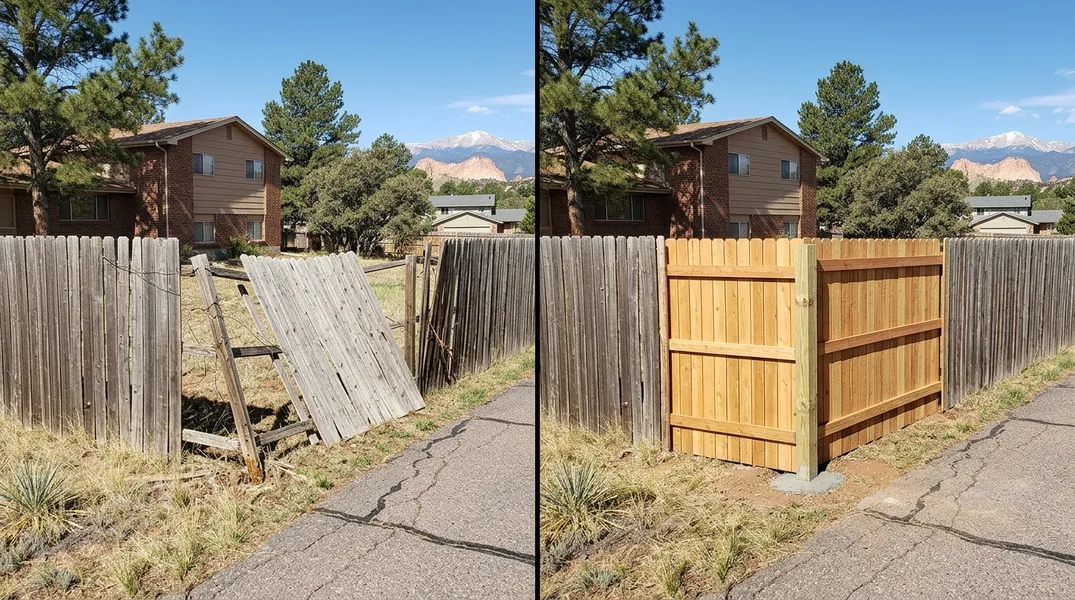
The Colorado Springs Fence Problem: Why Your Fence Is Leaning
If you own a home in Colorado Springs, you've likely noticed something troubling: fences that lean, bow, or shift over time. This isn't a sign of poor installation or cheap materials alone. The real culprit lies beneath the surface, literally. Colorado Springs sits on a foundation of expansive clay soil and experiences freeze-thaw cycles that create conditions perfect for fence damage.
Homeowners often assume their fence is failing because of age or weather exposure. While those factors matter, the ground itself is working against your fence posts year-round. Understanding what's happening below grade is the first step toward finding the right solution. Whether you're dealing with a single leaning section or multiple posts that have shifted, knowing the cause helps you choose the best repair strategy.
Frost Heave: The Winter Enemy of Fence Posts
Colorado Springs experiences significant temperature swings between seasons. Winter temperatures regularly drop below freezing, and the ground freezes to considerable depths. This freeze-thaw cycle creates a phenomenon called frost heave, which is one of the primary reasons fence posts fail in our region.
Here's how frost heave works: when water in the soil around a fence post freezes, it expands. This expansion pushes the post upward. When spring arrives and the soil thaws, the post settles back down, but rarely in exactly the same position. Over multiple winter cycles, this repeated lifting and settling causes the post to shift sideways, lean, or develop gaps. If a post was installed in shallow soil without proper drainage, frost heave accelerates the damage. Posts installed above the frost line (which in Colorado Springs is typically 32 to 48 inches deep) are especially vulnerable to this movement.
The problem worsens if water collects around the base of posts or if the soil doesn't drain well. Poor drainage means more water freezes in winter, creating stronger heaving forces. This is why Wood & Privacy Fence Installation done correctly requires posts set deep enough and in well-draining conditions. A leaning fence post is often a direct result of inadequate depth or drainage during the original installation.
Expansive Soil: Colorado Springs' Hidden Challenge
Beyond frost heave, Colorado Springs faces another underground enemy: expansive clay soil. Much of the region sits on clay-rich soil that swells when wet and shrinks when dry. This expansion and contraction cycle creates constant pressure on anything buried in it, including fence posts. Unlike sandy or loamy soil that remains relatively stable, expansive clay can shift dramatically with moisture changes.
During Colorado's wet spring season or after heavy rain, expansive soil absorbs water and swells. This puts lateral pressure on fence posts, pushing them sideways. Then, during our dry summers and falls, the soil shrinks back, leaving gaps and allowing posts to settle unevenly. A post that was perfectly plumb in June may be noticeably leaning by August. This isn't a structural failure of the post itself; it's the ground actively moving the post out of position.
Homeowners often don't realize that expansive soil is the issue until they notice multiple posts leaning in the same direction or a fence that seems to shift seasonally. The damage accumulates year after year, making early intervention crucial. If you're experiencing this problem, contact Colorado Springs Fence Company at (719) 425-4642 for a professional assessment. We can identify whether expansive soil is the culprit and recommend the most durable repair solution.
Recognizing Rotted Fence Post Repair vs. Structural Shifting
Not all leaning fences are caused by frost heave or expansive soil. Sometimes the posts themselves are deteriorating. Wood posts, in particular, absorb moisture and can rot from the ground up. A rotted fence post repair differs significantly from fixing a post that's been shifted by soil movement, so accurate diagnosis is essential.
Rotted posts typically show soft, spongy wood at the base, discoloration, or visible decay. The post may lean because the wood has lost its structural integrity and can no longer support the fence panels. In contrast, a post shifted by frost heave or expansive soil often appears structurally sound but is simply out of plumb. You can test this by pressing your hand against the post near the ground. If your thumb sinks into soft wood, rot is the issue. If the wood feels solid but the post is tilted, soil movement is likely responsible.
The distinction matters because the repair approach differs. A rotted fence post repair typically requires fence post replacement with a new post set properly below the frost line. A post shifted by soil movement might be straightened and re-set, or replaced with better installation techniques. Either way, professional evaluation ensures you get the right fix the first time.
Fence Post Replacement and Repair Solutions in Colorado Springs
Once you've identified the cause of your leaning fence, the repair strategy becomes clear. For posts damaged by frost heave or expansive soil, fence post replacement is often the most reliable solution. Replacing posts allows us to install them at the correct depth, below the frost line, and in conditions that minimize future movement.
When we replace fence posts in Colorado Springs, we use several best practices. Posts are set deeper than minimum code requires to account for our aggressive frost heave conditions. We ensure proper drainage around the post base, often using gravel or permeable backfill to prevent water accumulation. For wood posts, we use pressure-treated lumber rated for ground contact. For added durability, some homeowners choose concrete footings with proper slope to shed water away from the post.
If only one or two posts are affected, targeted replacement is cost-effective. If multiple posts show damage, it may indicate a systemic problem with the original installation or site drainage. In those cases, we assess whether the entire fence needs attention or if strategic repairs will suffice. Our team can provide a detailed evaluation and honest guidance on the best approach for your specific situation.
When to Call a Professional for Leaning Fence Repair Near Me
Homeowners sometimes attempt DIY leaning fence repair by adding braces or pushing posts back into position. While these temporary measures might seem to help, they rarely address the root cause. If frost heave or expansive soil is still active, the post will continue to move. A DIY fix might buy you a season or two, but you'll face the same problem again.
Professional leaning fence repair requires proper tools, materials, and knowledge of local soil conditions. Colorado Springs Fence Company understands the specific challenges that regional soil and climate create for fences. We have the equipment to properly set posts, the materials suited to our environment, and the experience to recommend solutions that last. Whether you need a free estimate or want to discuss your options by phone at (719) 425-4642, we're here to help.
The cost of professional repair is often less than the cost of replacing an entire fence later due to compounding damage. Early intervention prevents small problems from becoming expensive failures. If you've noticed leaning posts, soft wood, or gaps developing in your fence, don't wait. Contact us today for a professional assessment and lasting solution.
Looking for a professional fence contractor in Colorado Springs? Colorado Springs Fence Company responds fast for all your fence needs.
Get a Free Quote