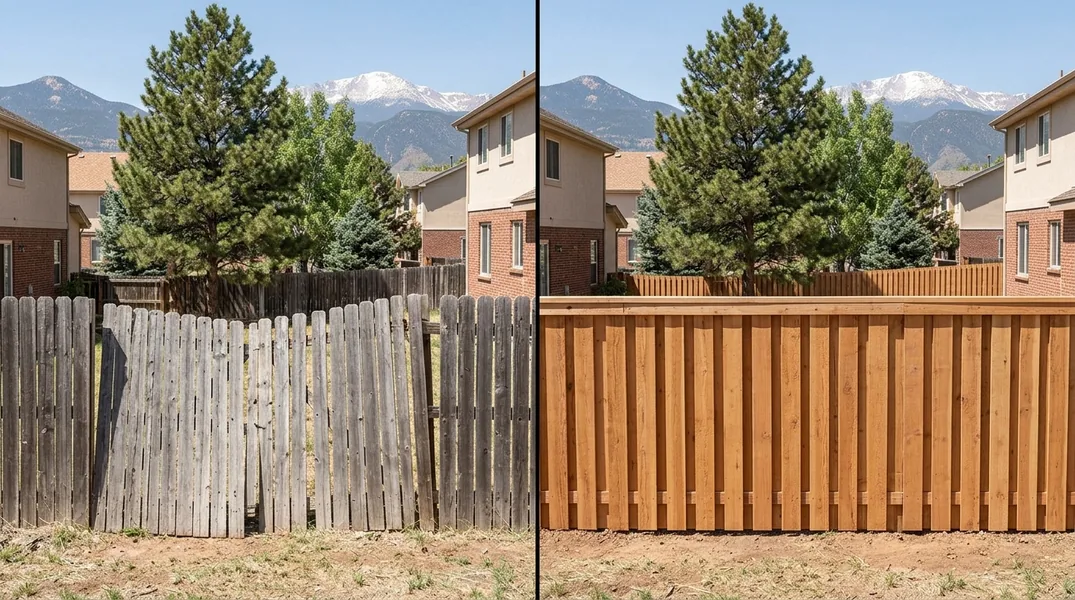
Understanding Colorado Springs' Unique Climate Challenges
Living in Colorado Springs means dealing with one of the most demanding climates in the country for fencing materials. The Front Range experiences intense UV exposure at high altitude, dramatic temperature swings between seasons, low humidity that can crack wood, and occasional hail storms that test any material's durability. Winter brings freeze-thaw cycles that can warp, split, and damage poorly chosen fencing. Summer heat combined with the thin mountain air creates conditions that few fence materials handle equally well.
When you're considering Wood & Privacy Fence Installation or Vinyl & PVC Fence Installation, you're essentially choosing between two fundamentally different approaches to weathering these conditions. Neither is universally perfect, but each has distinct advantages and drawbacks when installed in our region. Understanding how these materials perform under Front Range conditions is the first step toward making an investment you won't regret.
Wood Fences: Classic Beauty with Real Maintenance Demands
Wood fencing has been the traditional choice for Colorado homeowners for generations, and there's good reason why. A well-built wooden privacy fence creates a warm, natural aesthetic that complements virtually any architectural style. Wood offers excellent sound dampening, provides genuine privacy, and can be stained or painted to match your home's exterior. Many homeowners in Colorado Springs prefer wood because it feels organic and can be customized in ways vinyl simply cannot match.
However, wood demands honest maintenance in our climate. The intense UV rays at our elevation fade stain and paint quickly, typically requiring resealing every two to three years. The freeze-thaw cycles we experience can cause boards to crack, warp, and split. Moisture from spring snowmelt combined with our dry summers creates stress on wood fibers. Termites and wood-boring insects, while less prevalent at higher elevations, still pose a risk. Rot can develop in the base of posts and lower boards, especially where water pools or snow accumulates. If you choose wood, budget for regular inspection, staining, sealing, and occasional board replacement. Many homeowners underestimate this commitment before installation.
Vinyl Fences: Low Maintenance Durability with Trade-Offs
Vinyl & PVC Fence Installation has become increasingly popular in recent years, particularly for homeowners seeking the best low maintenance fence option. Vinyl doesn't rot, doesn't require staining or sealing, and resists UV fading far better than wood. It won't splinter, doesn't attract insects, and needs only occasional washing with soap and water to maintain its appearance. For busy homeowners or those planning to stay in their homes long-term without constant upkeep, vinyl offers genuine peace of mind.
The catch is that vinyl behaves differently in Colorado's extreme temperature ranges. PVC plastic expands and contracts significantly with temperature changes, which is why quality vinyl fences include expansion gaps and are installed with slightly looser fastening than wood. In rare cases of extreme cold (below minus 20 degrees Fahrenheit), vinyl can become brittle, though modern formulations handle our climate reasonably well. Vinyl also costs more upfront than wood, though that premium is often recovered through reduced maintenance over 15 to 20 years. Additionally, vinyl fences can eventually fade to a chalky gray if exposed to intense UV without occasional cleaning, though this is primarily an aesthetic issue rather than a structural one.
Wood & Privacy Fence Installation Cost in Colorado Springs: What to Budget
When comparing vinyl vs wood fence economics, the initial investment differs substantially. Wood fencing typically costs less per linear foot to install, making it attractive for homeowners with budget constraints. However, this lower upfront cost can be misleading when you factor in the total cost of ownership. You'll need to budget for stain or paint every few years, occasional board replacement, and professional maintenance or inspection services. Over a 20-year period, these expenses accumulate significantly.
Vinyl fencing carries a higher initial pricing structure, but the lack of required maintenance means your long-term costs are more predictable and typically lower. You won't need to hire contractors for resealing or restaining. The fence will look essentially the same in year 15 as it did in year 2, assuming normal weather exposure. For specific pricing information tailored to your Colorado Springs property, contact Colorado Springs Fence Company at (719) 425-4642 for a detailed estimate that accounts for your specific project scope and material choice.
Durability and Lifespan: Which Material Wins in the Front Range
In Colorado's climate, wood fences typically last 15 to 20 years with proper maintenance, though some well-maintained installations have reached 25 years. However, this assumes consistent care and prompt repair of damage. Without regular attention, wood fences can deteriorate noticeably within 10 to 12 years. The variable lifespan depends heavily on the quality of installation, the type of wood used, and your commitment to ongoing maintenance. Pressure-treated pine is standard in the region, but some contractors use cedar or other species that offer slightly better rot resistance at higher cost.
Vinyl fences typically last 20 to 30 years or longer with minimal intervention. The material doesn't degrade in the ways wood does, though UV exposure and temperature cycling do eventually cause some changes in appearance. Most quality vinyl fences installed properly will outlast their wood counterparts when you factor in the cumulative effects of Colorado's weather. If you're planning to remain in your home for decades, vinyl offers greater certainty about your fence's appearance and structural integrity well into the future.
Making Your Decision: Which Fence Material Is Right for You
Choosing between wood and vinyl ultimately depends on your priorities, budget, and lifestyle. If you value traditional aesthetics, enjoy outdoor maintenance projects, and want lower initial costs, wood remains a solid choice. If you prioritize convenience, can invest more upfront for long-term peace of mind, and want the best low maintenance fence option, vinyl is worth the premium. Some homeowners even combine materials, using vinyl for side and back yards while choosing wood for visible front areas where aesthetics matter most.
The professionals at Colorado Springs Fence Company have installed both wood and vinyl fences throughout the region and understand how each material performs under our specific climate conditions. Rather than pushing one option over another, we help homeowners make informed decisions based on their actual needs and circumstances. Whether you're leaning toward wood, vinyl, or still weighing your options, we encourage you to reach out for a free estimate and professional consultation. Call us at (719) 425-4642 to discuss your project with someone who understands Front Range fencing challenges firsthand.
Looking for a professional fence contractor in Colorado Springs? Colorado Springs Fence Company responds fast for all your fence needs.
Get a Free Quote